
Discovering Poseidon’s grass the magic forest of our dives

When you glide beneath the surface of the water in Crete, you often fly over immense
green prairies that sway gently with the current. Sometimes we pass right over them
without paying much attention as we look for more spectacular animals. Yet this plant
known as Poseidon’s grass is the true backbone of all local underwater life and it
really deserves that we stop for a moment to understand its magic.
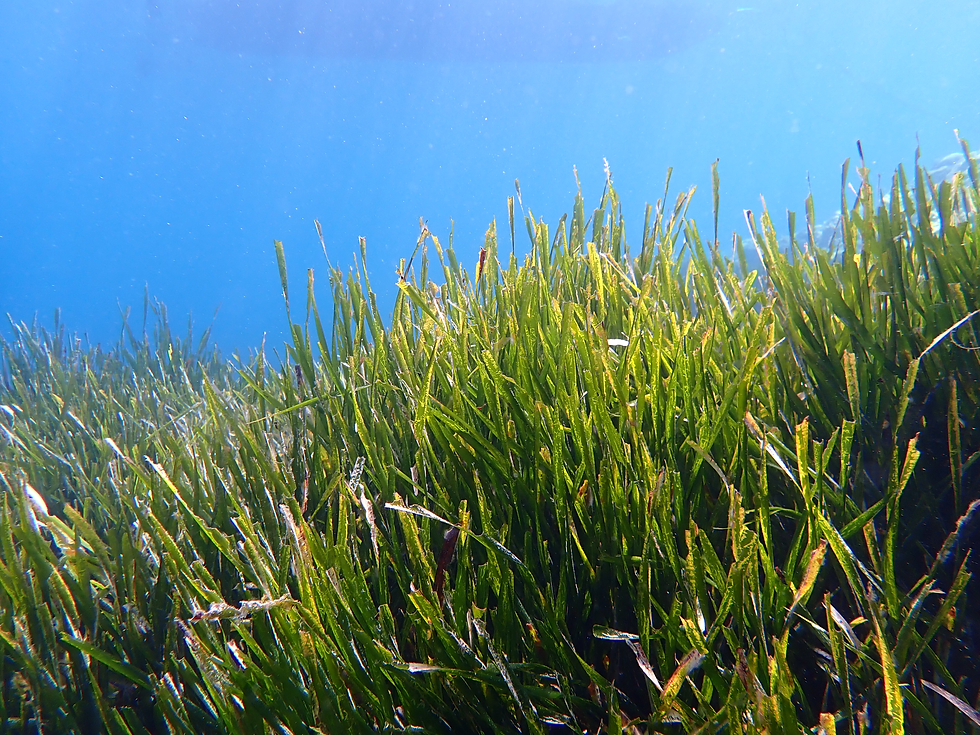
To begin with, you should know that Poseidon’s grass is not seaweed at all but a true
flowering plant that has adapted to underwater life. It has strong roots, long green
leaves, and it even produces flowers and fruit as the seasons change. This incredible
aquatic forest is often nicknamed the lungs of the Mediterranean because a single
square meter of this meadow is capable of producing more oxygen on a daily basis
than an equivalent area in the Amazon rainforest.
In addition to oxygenating the sea, this plant offers essential protection to a multitude
of marine inhabitants. The meadows form giant natural nurseries where baby fish,
tiny cuttlefish, and octopuses come to find shelter to escape predators. It is an
immense area of life and food that allows all biodiversity to develop and thrive in
complete safety.
Poseidon’s grass also plays a crucial role in the beauty and survival of our beaches.
Its long leaves break the force of waves and currents which prevents the sand from
disappearing during storms. Even when it dies, its dried leaves pile up on the shore
to form natural mats that protect the coastline against erosion and preserve the
coastal landscapes that everyone loves so much.

Unfortunately, this underwater treasure is now in danger because of human activities.
Poseidon’s grass grows extremely slowly and a boat anchor dropped in the wrong
place can destroy in just a few seconds a meadow that took centuries to form.
Protecting this plant is an absolute duty for anyone who loves the sea and it is
enough to just pay attention to where you anchor to become a guardian of the
Mediterranean in your own right.


Comments